

Subscriptions are easy until they own the file, the workflow, and the invoice. Linux is an open platform: you can run open-source software that now rivals big enterprise suites — without a large IT staff. For a small Orlando shop, that is a real option, not a hobby.
Custom Linux and company Android systems are quoted after we see what you run. Hosting for a public website still starts from $49/month.
An open platform lets you keep the files, pick the tools, and grow as the shop grows — instead of renting a new logo every time the work changes.
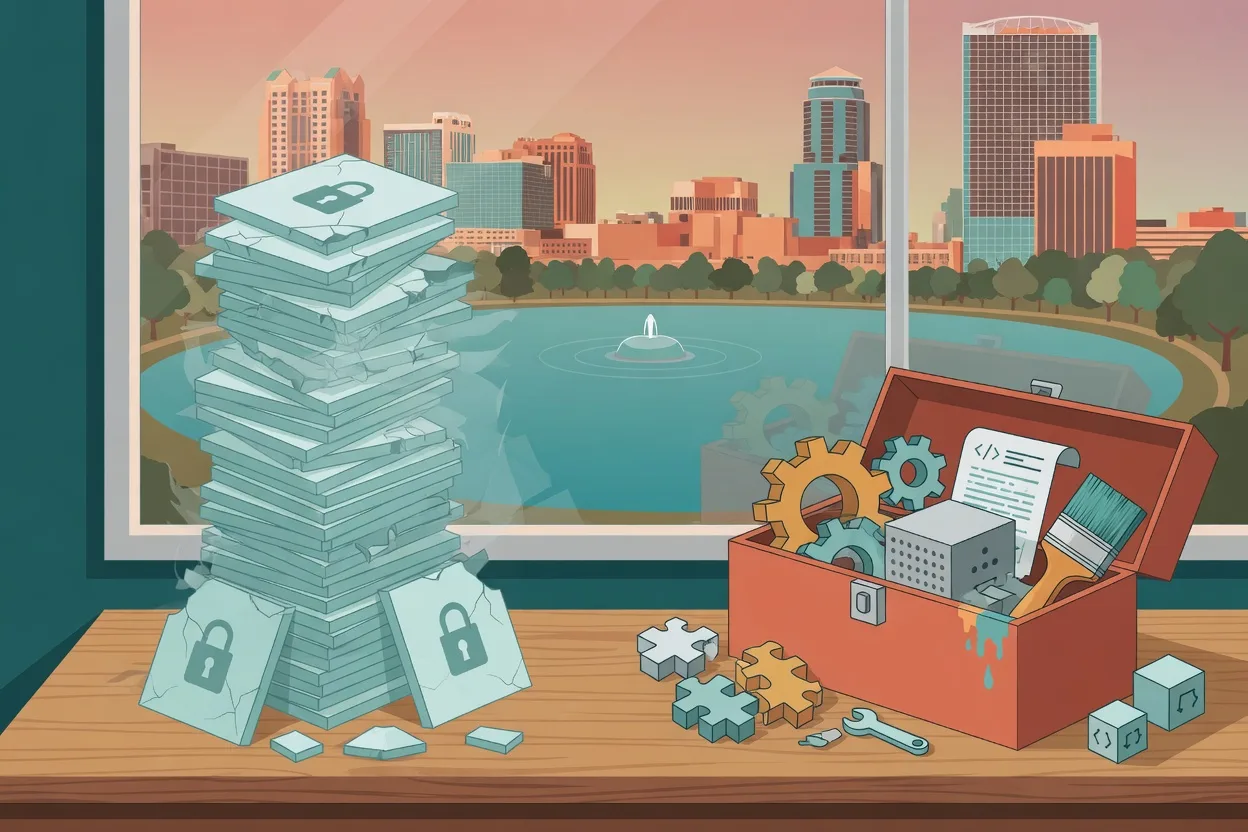
What subscriptions quietly cost
A seat for mail, a seat for files, a seat for design, a seat for “AI.” Each one is fine until you cannot export, cannot control a device, and cannot say where the client file lives. Then you are paying someone to manage vendors, not the work.
Linux does not make vendors disappear. It changes who holds the keys. The Linux we actually put on company machines is on the vendor list. Company Android can join with only the permissions you grant.
Open platform
A computer you can point at, patch, and extend with software you chose — including open-source tools that talk to each other — without a per-seat tax on every new job.
What a small shop can actually run
This is not “replace every tool on Saturday.” It is a quoted path:
- A custom Linux system as the company desk
- Company Android on the floor, kept apart from personal data
- Containers so each service stays in its own box
- A custom business system with a screen staff can use and a trail of who did what — intake, payments, clients, orders, docs, creative work
Agents can sit on that platform. You pick the API provider and how capable the model needs to be. Agentic implementation still starts with discovery from $250. The Linux and business-system work is quoted.
The shop-floor companion is customized local software for a small shop.
Why this is newly practical
“Enterprise-grade” used to mean a team that only did IT. Containers, mature open-source suites, and agentic tools that take actions (with a person reviewing) mean a five-person shop can own an environment that used to look like a department.
The catch is ordinary: only company apps on company devices, personal data stays off them, keep an audit trail, quote the build. That is custom business systems.
A short leave-the-rental check
- List the subscriptions that hold client files or brand files.
- Can you export them this month without a fight?
- Would a company Linux desk hold those files instead?
- Quote that move. Do not flip on a Friday.
Want that conversation in Central Florida? Contact Orlando Web & IT. Bring the tool list. We will say what belongs on an open platform and what should stay a vendor for now.