

You’ve probably noticed the padlock icon in your browser’s address bar — or the alarming “Your connection is not private” warning. That padlock is a visual indicator of an SSL certificate, and in 2026 every business website needs one.
HTTPS is not a luxury badge. It is basic trust infrastructure for forms, rankings, and everyday browsers.
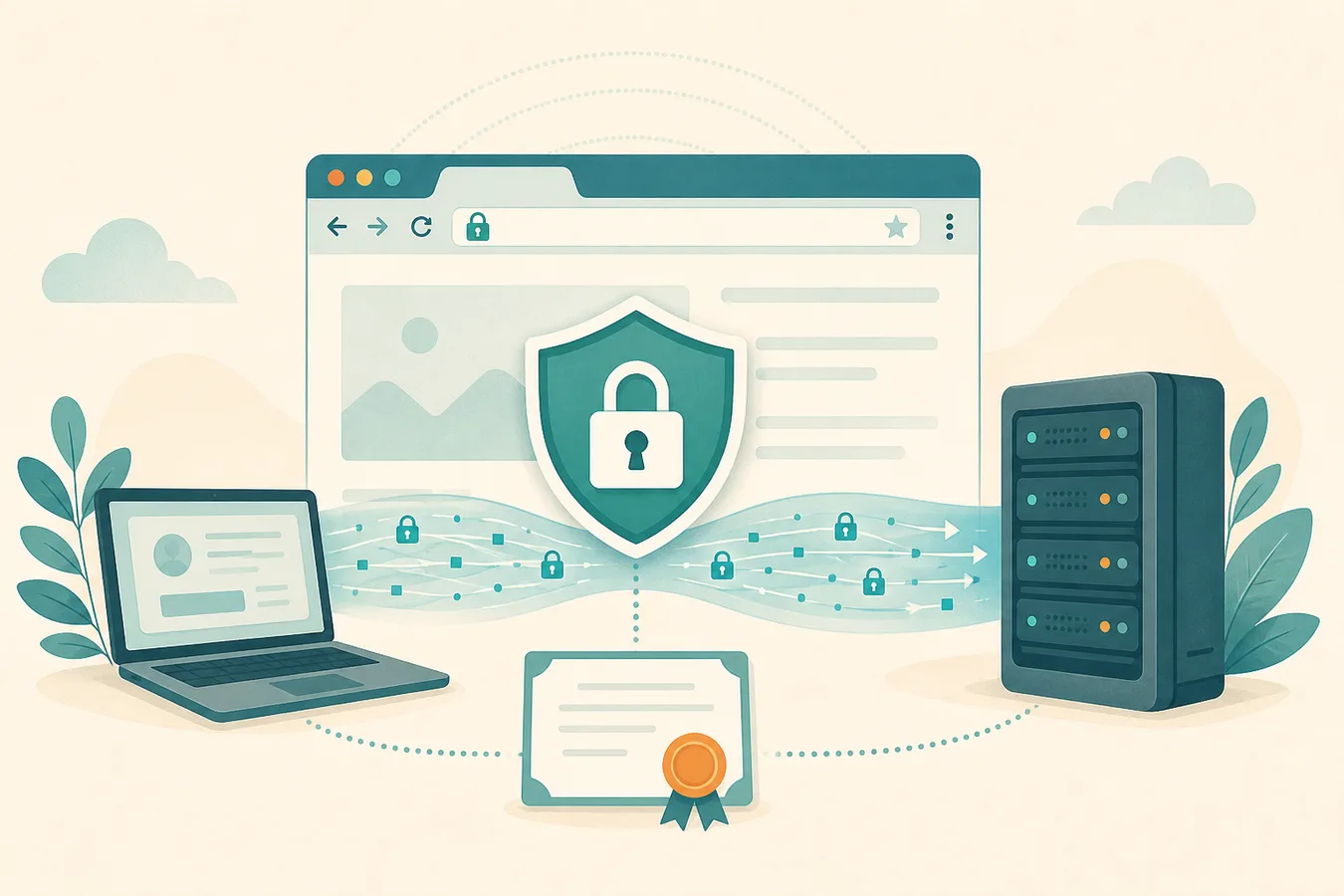
What is an SSL certificate?
SSL / TLS
SSL stands for Secure Sockets Layer. The modern protocol is TLS (Transport Layer Security), but “SSL” stuck in everyday usage.
An SSL certificate does two jobs:
- Encrypts the connection between a visitor’s browser and your server so form data, passwords, and payments are not sent in plain text.
- Helps verify that the site is being served for a domain you control, via a trusted Certificate Authority.
When both are in place, browsers show the padlock and your URL uses https:// instead of http://.
Why it matters for your business
- Search: Google treats HTTPS as a ranking signal. If competitors have SSL and you do not, you start behind.
- Browsers: Chrome, Safari, Firefox, and Edge all warn loudly on HTTP — and some mobile browsers block insecure form posts.
- Data protection: Even a simple contact form on HTTP sends names and emails in the clear.
Types of SSL certificates
Not all certificates are equal, though for most small businesses the free DV option is enough.
- Domain Validated (DV) — Confirms domain control. What Let’s Encrypt provides. Fine for service and informational sites.
- Organization Validated (OV) — Also checks that the organization is a real registered entity.
- Extended Validation (EV) — Highest verification. Overkill for most small businesses.
How to tell if your site has SSL
Quick check
- Visit your website in a browser.
- Look at the address bar — does it show https:// or http://?
- Open the icon beside the address — you want a padlock, not a warning triangle.
You can also use SSL Labs’ free SSL Test to check certificate quality and configuration.
How to get SSL on your site
- Let’s Encrypt — Free, automated, widely trusted. Renews about every 90 days. Official docs: Let’s Encrypt on the vendor list.
- Cloudflare Universal SSL — Free HTTPS between visitors and Cloudflare when DNS sits there.
- Paid CA certs — DigiCert / Sectigo-style certs exist, but free DV is usually identical in practical security for small sites.
Watch for mixed content: an HTTPS page that still loads images or scripts over HTTP will keep the padlock from looking clean.
Related reading: Florida web hosting guide, SSL & HTTPS service, and hosting care when the certificate should just renew.